
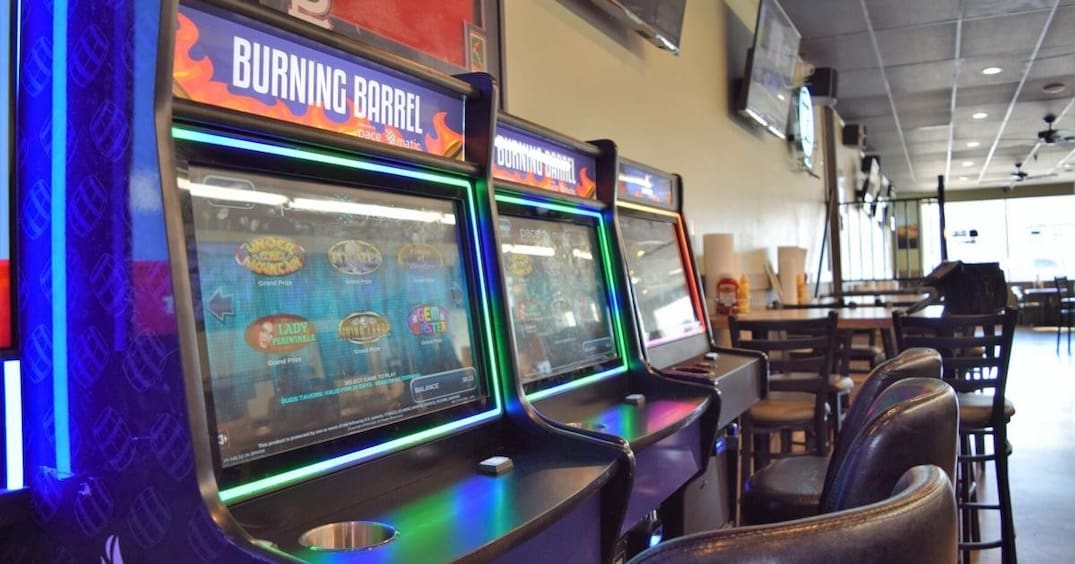
Update on gray machines (a.k.a., video lottery terminals)
June 12, 2026
A recent federal court opinion has given cities guidance on how to handle the increasing amount of “gray machines” throughout the State. The Court ruled that gray machines, also known as “no chance” gambling machines or video lottery terminals, are illegal gambling machines when operated outside of a licensed casino.
The central issue at hand was whether the gray machines meet the State law definition of gambling. Under Missouri laws, gambling is legal in many forms, including bingo, lottery, riverboat gaming, horse racing, and fantasy sports. These types of gambling are highly regulated by the Missouri Gaming Commission or the State Lottery Commission. Any form of gambling must be authorized by Missouri law. Section 572.010, RSMo. provides that a person’s actions constitute gambling when a person “stakes or risks something of value upon the outcome of a contest of chance or a future contingent event not under his or her control or influence, upon an agreement or understanding that he or she will receive something of value in the event of a certain outcome.” Section 572.010, RSMo. also provides that a gambling device is considered such if it is usable in gambling activities.
Torch Electronics, the operator of a significant number of gray machines in Missouri, argued that their machines do not constitute gambling because the machines allow the user to see the prize for the next play before the user agrees to the next play. The Court ruled that the ability to view the prize does not have a factor in whether the machines are gambling, as the prize viewer is not required to be used. The Court noted that if the prize viewer is not used, the machines are “indistinguishable from a standard casino slot machine game.” If the prize viewer is used, the user is gambling as to what the prize viewer will show for the next play, which the user has no way of knowing or predicting. Thus, the Court ruled that the Torch machines are usable in gambling activities and are illegal if they are not located in licensed casinos.
Since the ruling, Torch Electronics has suspended its operations. The United State Department of Justice and Missouri Attorney General Catherine Hanaway have indicated that they will conduct a criminal investigation of Torch Electronics. It appears that Torch Electronics is not removing machines of its own volition but will remove them if retailers ask.
Cities with gray machines within their jurisdiction may utilize this court ruling to bolster their own enforcement mechanisms against companies operating gray machines. It is important to note that this Court ruling directly affects Torch Electronics only. The ruling is based on analysis of the specific machines Torch Electronics operates but it will be useful for cities who are interested in prosecuting operators of gray machines. Any enforcement should include analysis of the specific operation of the machines at issue to understand if they operate in violation of this ruling and State law. While the Attorney General and the State Highway Patrol have been enforcing State law against gray machines, cities can create their own ordinances to enforce against gray machines. Cities may also consider amending business license laws to ensure that business licensees are complying with all city and State laws or amending nuisance laws to provide that business operations that are in violation of city and State laws are nuisances.